Your Guide to a Successful Writing Career
| |||||
|
by Moira Allen
Freelance newsletter development can bring anywhere from $25 to
$50 per hour (or more), or a flat fee of several hundred dollars
per issue. Since most newsletters are produced monthly or
biweekly, income is steady and checks are regular. The job can
also be challenging: While some newsletters are admittedly dull,
others involve skillful writing and reporting. Most of all,
managing an effective newsletter means making decisions and
gathering information on three vital areas: Content, Audience,
and Authority.
Corporate newsletters still tend to follow traditional patterns of "front page" news, "inside items," and "back page announcements" -- even when no physical pages are involved. While content may vary widely, the following categories usually apply: Front Page News. These items focus on company-wide achievements, successes, or changes that affect the entire company. You may cover the winning of a major contract, the successful completion of a project, the opening of a new office, the development (or launch) of a product, or the hiring of a new vice president. "Front page" items usually offer the most opportunity for creativity; readers will appreciate an editor who can do more than just list figures and names, but who can dig deeper for quotes, examples, anecdotes, and anything else to "flesh out" the bare facts. Departmental News. The second "tier" of coverage focuses on keeping various sections of a company informed about what other sections are doing. These items cover achievements by individuals, projects, or departments -- including updates on projects, announcements of new management hires, and any other "department-level" news. You may also have an opportunity to write articles recognizing staff members for personal achievements, such as the publication of a book or a community service award. Keep in mind that while all departments like equal time, some will be more aggressive in providing material; try to "rotate" features to cover all sections of the company. Company Updates. Newsletters are often used to provide updates on policies or procedures, announcements of new equipment or training, or similar information. If you find nothing new to report in this area, consider running a general information piece, such as a roster of "who to call" on administrative issues. Support Staff News. A good newsletter will cover not only issues of interest to (or about) management, but also articles on members of the support staff. This is the place to report that Mary Smith received her 25-year company pin, or that Joe Davies won the turkey raffle. You may find less leeway to report on non-company achievements, however. Calendar Items. Newsletters are the best place to announce company-wide events, such as holiday parties, ski trips, picnics, raffles, etc. If a company is divided into many small, far-flung offices, try to include only those items that will be of interest to the company as a whole (i.e., a ski trip at the Colorado office won't be of interest to staff in the Florida office). Employee Announcements. When space permits, many newsletters offer announcements of job openings, new hires, transfers, promotions, departures, employee anniversaries, and similar events. Some even include birthdays, marriages, babies,etc. Filler.When news is scarce, don't hesitate to insert copyright-free cartoons, art, or humorous items. (One corporation saved incoming mail that had been amusingly misaddressed -- such as "Mr. XYZ Corp" -- to use as filler.) Bad News. You may never see this category: Most corporations don't care to publish news about lost contracts, failed projects, or internal problems. This often leads to accusations of "ignoring" or "glossing over" problems -- but it's a policy editors can rarely change. Ideally, a newsletter should offer a blend of these categories -- but not all newsletters are ideal. Content is often dictated not just by news, but by who is reading that news. Defining the AudienceCorporations invariably declare that a newsletter is "for the whole company." Unfortunately, that isn't always true. Some newsletters are, in fact, designed to be read primarily by upper and middle management. Consequently, such newsletters will focus primarily on items of interest to that audience -- which usually means items about that audience. Such a newsletter will typically cover individual and departmental achievements and activities, including completed projects, successful products, new contracts, important meetings and briefings, and even business trips. Names are important: You'll be expected to list all the key figures involved in an event (e.g., everyone who attended a briefing). Personnel coverage may mean writing a bio sketch of a newly hired project director -- but not of the new clerk in the mail room. Other newsletters focus on support staff issues -- the interests of people who don't make the decisions or attend important meetings. This type of newsletter will focus on company news, announcements, policy changes, calendar items, employee news, and coverage of events of interest to support staff. (For example, you may write an extensive article about the employee picnic or ping-pong tournament -- items which might get only a one-line mention in an "upper management" newsletter.) "Staff" newsletters may also be more open to employee contributions (such as poetry, essays, or personal accounts). Some corporate newsletters are distributed to external audiences, such as clients, customers, or suppliers. In this case, only items that place the company in the best possible light will be published. As a writer, you may find that you must have every article triple-checked not only for style, but also to ensure that it contains no proprietary, sensitive, or "secret" information. (Even information such as how many employees have been hired to work on a particular project can be considered "sensitive" -- and therefore censored -- as it could give a competitor information on how the company is handling a contract.) Policy, calendar, and support-staff items are minimized, and may disappear entirely (or be moved to another venue). Again, companies may not always be "honest" about a newsletter's intended audience. If your point of contact won't give you this information, find out whether the company has produced newsletters in the past -- then ask what changes should be made. For example, in some cases a company may wish to make a "support-staff" newsletter more technical and professional; in others, it may wish to make a "management" newsletter more "staff-friendly."
As a freelance editor, you may find that the most challenging aspect of preparing a newsletter is not gathering information or writing articles, but negotiating the maze of review procedures and approvals that must take place before your newsletter sees "print." Before you take on such an assignment, be sure that you have clearly established the lines of communication, procedures, and "authority issues." Before you start, you'll need to know:
The final stage of newsletter development is "production." Once, it was easy to describe this stage: "Choose a nice quality paper, an attractive layout, and an appropriate color of ink." Alas, it is no longer so simple. Today, you may be asked to produce a newsletter in print format, electronic format, or both. Consequently, while desktop publishing skills are still helpful, electronic skills may be even more important. Your chances of getting the job are likely to improve if you can convert a newsletter into e-mail, present it in a faxable format, or provide an online version. (This ability may also persuade a company to hire you; many companies balk at the cost of printing a newsletter, but will eagerly embrace the idea of an electronic edition.) Corporate newsletters are rarely exciting. However, they provide a steady source of freelance income -- and a valuable resource for many companies. And who knows? Your editorial voice may be just the thing to bring that "company rag" alive! Find Out More...
This article originally appeared on Writer on Line.
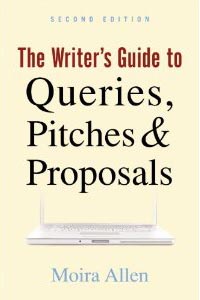
Moira Allen is the editor of Writing-World.com, and has written nearly 400 articles, serving as a columnist and regular contributor for such publications as The Writer, Entrepreneur, Writer's Digest, and Byline. An award-winning writer, Allen is the author of numerous books, including Starting Your Career as a Freelance Writer, The Writer's Guide to Queries, Pitches and Proposals, and Coping with Sorrow on the Loss of Your Pet. In addition to Writing-World.com, Allen hosts VictorianVoices.net, a growing archive of articles from Victorian periodicals, and The Pet Loss Support Page, a resource for grieving pet owners. She lives in Kentucky with her husband and the obligatory writer's cat. She can be contacted at editors "at" writing-world.com. |
| ||||
| |||||